Wealth is moving, and getting younger: reading the Knight Frank Wealth Report 2025
Knight Frank's 19th Wealth Report finds affluence expanding, globalising, mobile, and passing to a next generation that buys on relationship. For luxury retail, that raises the value of simply knowing who your best clients are.
Knight Frank's Wealth Report is now in its 19th edition, and though it is written for people who buy prime property and private jets, its picture of where wealth sits and how it behaves is one of the most useful maps a luxury retailer can read. This year's edition describes a wealthy population that is growing, spreading, moving, and changing hands, and every one of those verbs matters at the counter.
More wealthy people, in more places
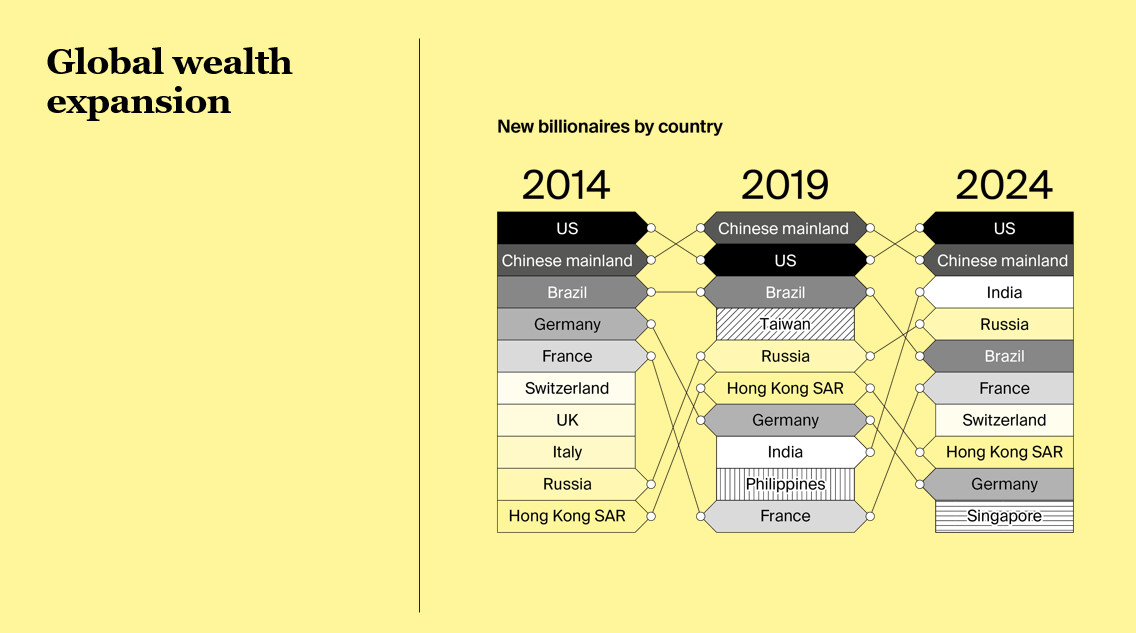
The number of individuals worth US$10 million or more rose 4.4 per cent last year, and those worth US$100 million passed 100,000 for the first time. The United States still dominates, home to nearly 40 per cent of the world's wealthy and leading in new wealth creation. But the growth is broadening: India now ranks fourth by HNWI population, the Middle East holds an outsized share of the very wealthiest, and Knight Frank expects Africa to outperform in the years ahead.
For a luxury house, the useful part is not the league table. It is that your next great client is less predictable by nationality than ever. Wealth is being made in more industries and more countries, which means it walks through your door under more names than it used to.
Wealth that moves
The report's loudest theme is mobility. The wealthy relocate, hold several homes, and move capital between jurisdictions with growing ease, supercharging markets from Miami to Dubai, where a US$1 million prime property in 2020 had become US$1.9 million and US$2.7 million respectively by 2025. Governments are competing to attract this mobile wealth and, in places, to tax it.
A mobile client is not a postcode. The person who bought from your London boutique in spring may spend the autumn in Singapore and the winter in Dubai. What holds that relationship together is being remembered. The house that recognises them wherever they appear keeps the relationship; the one that treats every visit as a stranger's first tends to lose it.
The next generation is already here
Underneath the numbers is a generational handover. Knight Frank's Next Generation Survey of wealthy 18- to 35-year-olds finds a cohort that works remotely and globally, prizes experiences and health over possessions, and researches online long before it commits. When they do buy a luxury asset, real estate leads their wish list, but the way they arrive at any purchase is relationship-led and information-rich. They expect the brands they favour to know them.
As the great wealth transfer accelerates, these are the clients whose loyalty is worth securing early. They will inherit the accounts that matter, and they will give them to the houses that treated them as clients before they had to.
Which brings it back to the counter
Property, jets, and vineyards are the report's subject, but its through-line belongs to retail too: wealth is larger, more global, more mobile, and younger than the person in front of you appears. A modest first order can belong to an ultra-high-net-worth individual, a mobile professional on their way into the millions, or the heir to a fortune deciding which brands to keep.
None of that is legible from a receipt. Reading it is the work. Halia was built to find the wealth signals already present in your own customer data, grade the person honestly, estimate the latent value behind a modest order, and hand your team the move that turns a passing buyer into a client for the next decade, wherever in the world they happen to spend it.
Figures cited are from the Knight Frank Wealth Report 2025 (19th edition). The reading, and any opinions, are our own.